
This blog post was written by our student ambassador Avneet, who is a junior research fellow in Linguistics at Tallinn University.
Every year, I eagerly await the arrival of spring and summer. Because this is the time to explore the interiors of Estonia. I absolutely love visiting Estonian islands. I am sure I am not the only student/expat who is checking off as many island visits as possible in Estonia. The crystal blue waters, warm sun shining up in the sky and glittering all over the sea, and greenery as far as your eyes can see! Sometimes I feel like gatekeeping all this from you but, I will not, so here you go! Did you know? Estonia is home to 2317 islands and is characterised by its vast archipelago, especially in its western region. Do not miss the opportunity to do island hopping and embrace slow travel through the spring and summer that will be around the corner in a few months.
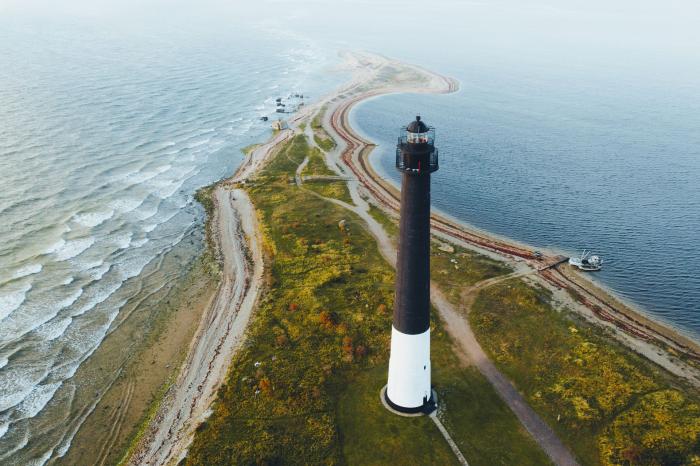
Sõrve lighthouse, Photo Credits: Evolumina
Most islands are inhabitable but, the ones that are, you can easily access them through a short ferry ride into the Baltic Sea. Funny backstory, before moving to Estonia, I lived in the tropical paradise of Goa where ferry rides are quite common but Goan ferries are not as big as the Estonian ones.
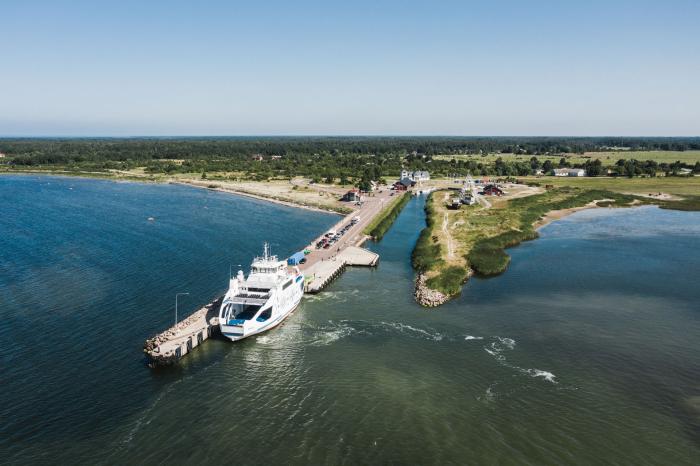
Sõrve lighthouse, Photo Credits: Priidu Saart
Spring is one of the most beloved seasons in Estonia; many songs, books, and plays have been written about the arrival of spring. Spring is marked through natural signs, such as the
- melting of snow and ice,
- the return of migratory birds (including the seagulls who are eyeing your food)
- the blooming of the early flowers.
Ok, let us get back to the islands!
Saaremaa
Saaremaa is Estonia’s largest island. It is known for its natural beauty, rich history and cultural heritage. You can explore the lighthouse, Kuuresaare Castle, spa resorts and notice a very interesting linguistic phenomenon. Saaremaa dialect lacks the ‘Õ’ vowel sound which makes the islanders immediately recognisable when they visit the mainland. Vowel sounds are somewhat difficult for me as a learner of the Estonian language too. It is nice to see I am not alone in the struggle to pronounce the vowel ‘Õ’.
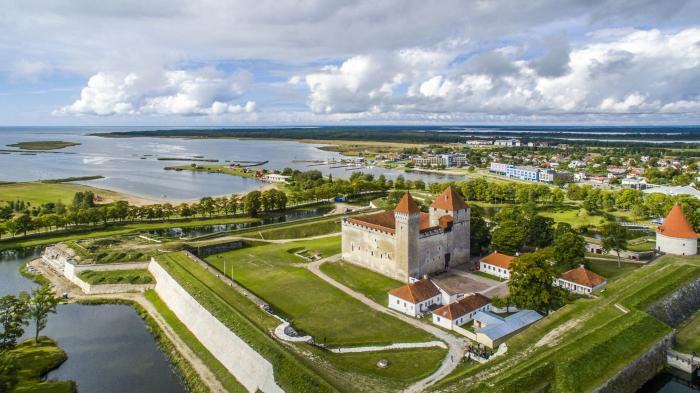
Photo Credits: Rainer Süvirand
Muhu
Muhu is known for its traditions, vintage ambiance, and natural landscapes. You can stroll on foot, explore by bicycle, horseback or boat. Muhu people are known for their nature-centric mindset. Unlike Saaremaa, pronouncing the letter 'õ' is not a problem for the people of Muhu and a part of the population of Pöide. The border between the vowels 'õ' and 'ö' runs from the north from Orissaare across Pöide to the Kõiguste Bay.
Kihnu
Kihnu island is home to 700 people who are a close-knit community. They have kept their traditions alive for centuries. Traditional dress, complex handicrafts, ancient songs, lively music and dance are part of everyday life on Kihnu, Estonia's seventh-largest island.
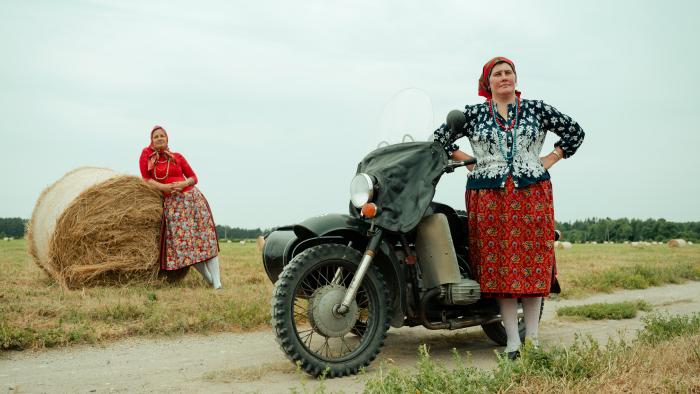
Photo Credits: Leon Metsallik
Kihnu is often quoted in the media as the last matriarch of Europe. This is debatable, but it is a fact that the island is run by women. They are the keepers and preservers of the island’s cultural heritage. This is because the men of Kihnu usually work for months at sea or off the island.
Hiiumaa
Hiiumaa is the second-largest island in Estonia. Hiiumaa is known for its exceptionally clean, and raw natural beauty. No spa center or health resorts, if we go by the sayings of the locals, Hiiumaa is a big spa in itself. Abundance of sunshine, long sandy beaches and calm sea waves. Salty sea water is believed to be really good for the skin and relieves bone pain. One of the oldest operating lighthouses in Estonia is in Hiiumaa, Kõpu lighthouse.
So, are you ready to explore?
Do not forget to enjoy the beauty of Estonia while studying here!
Sources
Find out which international degree programmes are available for you in Estonia.
Read more blog posts:
- Get to know Estonian universities through virtual tours!
- 7 benefits of studying abroad
- Studying in Estonia: Frequently Asked Questions